
Selections from
‘No man hath seen God at any time: the only-begotten Son who is in the bosom of the Father, he hath declared him.’
The God-head, then, is ineffable and incomprehensible. For no one knoweth the Father, but the Son: neither doth any one know the Son, but the Father.’
Nevertheless, God has not gone so far as to leave us in complete ignorance, for through nature the knowledge of the existence of God has been revealed by Him to all men. The very creation of its harmony and ordering proclaims the majesty of the divine nature. Indeed, He has given us knowledge of Himself in accordance with our capacity, at first through the Law and the Prophets and then afterwards through His only-begotten Son, our Lord and God and Saviour, Jesus Christ.
Book 1, Chapter 5
It has been sufficiently demonstrated that God exists and that His essence is incomprehensible. Furthermore, those who believe in sacred Scripture have no doubt that He is one and not several. For the Lord says at the beginning of His lawgiving: I am the Lord thy God, who brought thee out of the land of Egypt. Thou shalt not have strange gods before me.’ And again: ‘Hear, O Israel: the Lord thy God is one Lord.’ And through the mouth of the Prophet Isaias: I am,’ He says, ‘the first God and I am the last and there is no God besides me. Before me there was no God and after me there shall be none, and beside me there is none.’ And the Lord speaks thus to His Father in the holy Gospels: This is eternal life: that they may know thee, the only true God.’ With those who do not believe in sacred Scripture we shall reason as follows.
The Divinity is perfect and without deficiency in goodness or wisdom or power. He is without beginning, without end, eternal, uncircumscribed; to put it simply, He is perfect in all things. Now, if we say that there are several gods, there must be some difference to be found among them. For it there is no difference at all among them, then there is one God rather than several. But, if there is some difference, then where is the perfection? For, if one should come short of perfection in goodness, or power, or wisdom, or time, or place, then he would not be God. The identity of God in all things shows Him to be one and not several.
And again, if there are several gods, how can one support the fact of God’s being uncircumscribed? For where there is one there cannot be another.
And, since there is bound to be conflict among several governing, how can the world be governed by several gods without being broken up and utterly destroyed?
Now, should any one say that each one rules over a part, then what was it that arranged for this and made the distribution among them? This last being would more likely be God. God, then, is one, perfect, uncirumscribed, the maker of the universe, the maintainer of order and governor, preceding and transcending all perfection.
Besides all this, it is naturally necessary that the originating principle of duality be unity.
“It is further necessary that the Word have a Spirit. Thus, even our own speech is not devoid of breath, although in our case the breath is not of our substance. It is an inhaling and exhaling of the air which is breathed in and out for the sustainment of the body. It is this which on the occasion of articulation becomes the vocal expression of speech and evidences in itself the power of speech.”
Book 1, chapter 7
Book 1, Chapter 6
Now, this one sole God is not without a Word. And, if He has a Word, this Word will not be non-subsistent, nor will it have any beginning or end of being. For there never was a time when God the Word was not. God always has His Word begotten of Himself not like our speech, which is non-subsistent and dissipated in the air, but distinctly subsistent, living and perfect, not passing out from Him but always existing within Him.
For where will He be if He is outside of God? Because our nature is mortal and subject to dissolution, for this reason our speech is non-subsistent. But, since God is existing always and is perfect, His Word must be always existing, living, perfect, distinctly subsistent, and having all things that His Begetter has. Now, our speech in proceeding from our mind is not entirely distinct from it. For, in so far as it comes from the mind, it is something distinct from it; whereas, in so far as it reveals the mind itself, it is not entirely distinct from it. Actually, it is identical with it in nature while distinct from it in its subject. Similarly, the Word of God, in so far as He subsists in Himself, is distinct from Him from whom He has His subsistence. But, since He exhibits in Himself those same things which are discerned in God, then in His nature He is identical with God. For, just as perfection in all things is to be found in the Father, so is it also to be found in the Word begotten of Him.
Book 1, Chapter 7
It is further necessary that the Word have a Spirit. Thus, even our own speech is not devoid of breath, although in our case the breath is not of our substance. It is an inhaling and exhaling of the air which is breathed in and out for the sustainment of the body. It is this which on the occasion of articulation becomes the vocal expression of speech and evidences in itself the power of speech. Now, in the simple and uncompounded divine nature the existence of a Spirit of God is piously to be confessed, for the Word of God is no more deficient than our own word.
It would be impious to reckon the Spirit as something foreign to God and later introduced from outside, as is the case with us who are compounded. On the contrary, it is as when we heard there was a Word of God and did not conceive of this as not being distinctly subsistent, or as accruing from learning, or as being expressed vocally and being diffused in the air and lost. Rather, we conceived of Him as substantially subsisting, endowed with will and operation, and all-powerful. In the same way, too, having learned that there is a Spirit of God, we conceive of Him as associated with the Word and making the operation of the Word manifest. We do not conceive of Him as an impersonal breath of air, for the majesty of the divine nature would be reduced to low estate if its Spirit were likened to our own breath. Rather, we conceive of Him as a substantial power found in its own individuating personality, proceeding from the Father, coming to rest in the Word and declaring Him, not separated from God in essence or from the Word with whom it is associated, having might, not dissipated away into non-existence, but distinctly subsistent like the Word living, endowed with will, self-moving, active, at all times willing good, exercising His power for the prosecution of every design in accordance with His will, without beginning and without end. For the Word fell short of the Father in nothing, and the Spirit did not fall short of the Word in anything.
Thus, on the one hand, the unity in nature exposes the polytheistic error of the Greeks; on the other hand, the doctrine of the Word and the Spirit demolishes the teaching of the Jews. At the same time, the good in both of these heresies remain: from the Jewish opinion the unity of nature; and from Hellenism the unique distinction according to persons.
 Should the Jew gainsay the doctrine of the Word and the Spirit, then let sacred Scripture refute him and reduce him to silence. Thus the divine David says concerning the Word: Tor ever, O Lord, thy word standeth firm in heaven.* And again: ‘He sent his word and healed them.’ But a spoken word is not sent and neither does it stand firm forever. Concerning the Spirit the same David says: ‘Thou shalt send forth thy spirit, and they shall be created.’ And again: ‘By the word of the Lord the heavens were established and all the power of them by the spirit of his mouth. Job likewise says: ‘The spirit of God made me: and the breath of the Almighty maintaineth me.’ Now a spirit which is sent, and acts, and strengthens, and maintains is not breath which is dissipated any more than the mouth of God is a bodily member. Both in fact are to be understood as appropriately referring to God.
Book 1, Chapter 8
Therefore, we believe in one God: one principle, without beginning, uncreated, unbegotten, indestructible and immortal, eternal, unlimited, uncircumscribed, unbounded, infinite in power, simple, uncompounded, incorporeal, unchanging, unaffected, unchangeable, inalterate, invisible, source of goodness and justice, light intellectual and inaccessible; power which no measure can give any idea of but which is measured only by His own will, for He can do all things whatsoever He pleases; maker of all things both visible and invisible, holding together all things and conserving them, provider for all, governing and dominating and ruling over all in unending and immortal reign; without contradiction, filling all things, contained by nothing, but Himself containing all things, being their conserver and first possessor; pervading all substances without being defiled, removed far beyond all things and every substance as being supersubstantial and surpassing all, supereminently divine and good and replete; appointing all the principalities and orders, set above every principality and order, above essence and life and speech and concept; light itself and goodness and being in so far as having neither being nor anything else that is from any other; the very source of being for all things that are, of life to the living, of speech to the articulate, and the cause of all good things for all; knowing all things before they begin to be; one substance, one godhead, one virtue, one will, one operation, one principality, one power, one domination, one kingdom; known in three perfect Persons and adored with one adoration, believed in and worshiped by every rational creature, united without confusion and distinct without separation, which is beyond understanding. We believe in Father and Son and Holy Ghost in whom we have been baptized. For it is thus that the Lord enjoined the Apostles: ‘Baptizing them in the name of the Father and of the Son and of the Holy Ghost.’
We believe in one Father, the principle and cause of all things, begotten of no one, who alone is uncaused and unbegotten, the maker of all things and by nature Father of His one and only-begotten Son, our Lord and God and Saviour, Jesus Christ, and Emitter of the All-Holy Spirit. We also believe in one Son of God, the only-begotten, our Lord Jesus Christ, who was begotten of the Father before all the ages, light from light, true God from true God, begotten not made, consubstantial with the Father, by whom all things were made; in regard to whom, when we say that He is before all ages, we mean that His begetting is outside of time and without beginning, for the Son of God was not brought from nothing into being; who is the brightness of the glory and the figure of the substance of the Father, His living power and wisdom, the subsistent Word, the substantial and perfect and living image of the invisible God.
Actually, He was always with the Father, being begotten of Him eternally and without beginning. For the Father never was when the Son was not, but the Father and the Son begotten of Him exist together simultaneously, because the Father could not be so called without a Son. Now, if He was not Father when He did not have the Son, and then later became Father without having been Father before, then He was changed from not being Father to being Father, which is the worst of all blasphemies. For it is impossible to speak of God as naturally lacking the power of begetting. And the power of begetting is the power to beget of oneself, that is, of one’s own substance, offspring similar to oneself in nature.
Accordingly, it is impious to say that time intervened in the begetting of the Son and that the Son came into existence after the Father. For we say that the begetting of the Son is of the Father, that is to say, of His nature; and if we do not grant that the Son begotten of the Father exists together with Him from the beginning, then we are introducing a change into the substance of the Father: namely, that He once was not Father, but became Father later. Now, creation, even if it was made at a later time, was not of the substance of God, but was brought from nothing into being by His will and power and does not involve any change in the nature of God. Begetting means producing of the substance of the begetter an offspring similar in substance to the begetter. Creation, on the other hand making is the bringing into being, from the outside and not from the substance of the creator, of something created and made entirely dissimilar [in substance].
Therefore, neither the act of begetting nor that of creation has any effect on the one, unaffected, unvarying, unchanging, and ever-the-same God. For, being simple and uncompounded and, consequently, by nature unaffected and unchanging, He is by nature not subject to passion or change, whether from begetting or from creating, nor does He stand in need of any co-operation. On the contrary, because the begetting is an action belonging to His nature and proceeding from His substance, it is without beginning and eternal, so that the Begetter undergoes no change and so that He is not a first God and a later God, but receives no addition. But, since with God creation is a work of His will, it is not co-eternal with Him which is because it is not of the nature of that which is produced from nothing to be co-eternal with that which is without beginning and always existing. Indeed, God and man do not make in the same way. Thus, man does not bring anything from non-being into being. What man makes he makes from already existing material, not by just willing but by thinking it out beforehand and getting an idea of what he is to make and then working with his hands, toiling and troubling and oftentimes failing because the object of his endeavor does not turn out as he wished.
God, on the other hand, has brought all things from nothing Into being by a mere act of His will. Hence, God and man do not beget in the same way. For, since God is without time and without beginning, unaffected, unchanging, incorporeal, unique, and without end, He begets without time and without beginning, unaffectedly, unchangingly, and without copulation. Neither does His unfathomable begetting have beginning or end. It is without beginning, because He is immutable; it is unchanging, because He is unaffected and incorporeal; it is without copulation, also because He is Incorporeal and because He is the only one God and without need of any other; it is unending and unceasing, because He is without time and without end and ever the same for that which is without beginning is without end, although that which is without end by a gift of grace is by no means without beginning, as is the case with the angels.
Accordingly, the ever-existing God begets without beginning and without end His own Word as a perfect being, lest God, whose nature and existence are outside of time, should beget in time. Now, it is obvious that man begets in quite another manner, since he is subject to birth and death and flux and increase, and since he is clothed with a body and has the male and female in his nature for the male has need of the female’s help. May He be propitious to us who is beyond all things and surpasses all understanding and comprehension.
Therefore, the holy Catholic and apostolic Church, the Orthodox Church, teaches that the Father exists simultaneously with His only-begotten Son, who is begotten of Him without time or change or passion and in a manner beyond understanding, 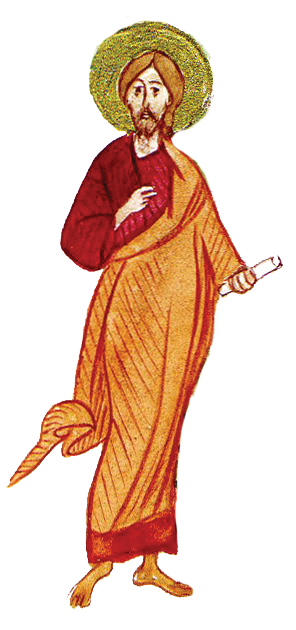 as only the God of all knows. They exist simultaneously, as does the fire with its light without the fire being first and the light afterwards, but both simultaneously. And just as the light is ever being begotten of the fire, is always in it, and is in no way separated from it, so also is the Son begotten of the Father without in any way being separated from Him, but always existing in Him.